
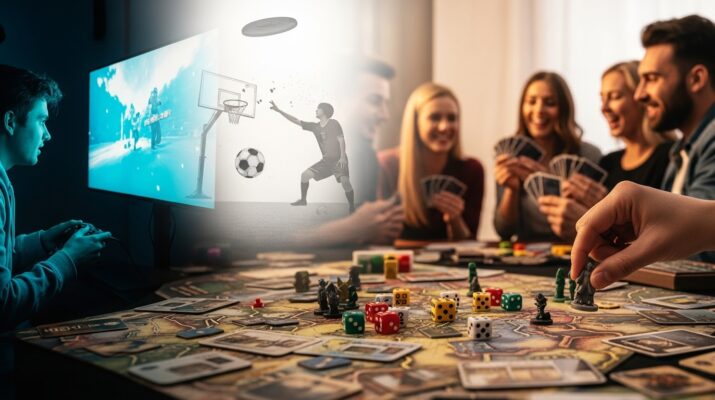
Video games have come a long way from the days of simple arcade experiences and pixelated characters. What once started as a form of entertainment has evolved into one of the most influential creative mediums in modern culture. Games today are not only about winning or achieving high scores—they are about imagination, problem-solving, storytelling, and innovation. Beyond the screen, they inspire art, music, design, and even real-world creativity.
The idea that games can spark creativity might surprise some who view gaming as purely recreational, but in truth, games provide players with unique environments that stimulate the mind, encourage exploration, and foster innovative thinking. Whether through building worlds, creating strategies, or making choices that shape a narrative, games push players to think outside the box.
This blog explores how games inspire creativity—how they engage our imagination, teach us to think critically, and influence artistic expression across industries.
The Connection Between Games and Creativity
Creativity is the ability to think differently, to generate ideas that are new and valuable. Games, by their nature, challenge players to approach problems in unconventional ways. Unlike passive entertainment, games require active participation. Players must analyze situations, make choices, and react to dynamic environments.
This interactive aspect of gaming directly engages the brain’s creative centers. Every action, from designing a city in a simulation to solving puzzles in an adventure game, involves decision-making and experimentation. Games reward curiosity and risk-taking—the very traits that fuel creativity.
Moreover, the visual and auditory design of games—the art, music, and storytelling—also stimulate creative appreciation. When players interact with these worlds, they absorb inspiration from color palettes, architecture, character designs, and even the emotional tone of soundtracks. Games not only inspire players but also push developers, artists, and musicians to innovate in their craft.
World-Building and Imagination
One of the most profound ways games inspire creativity is through world-building. Many games provide players with the tools to create, modify, and shape their own worlds. This level of creative freedom transforms players into architects, designers, and storytellers.
Sandbox and open-world games encourage exploration and creation without rigid boundaries. Players can build cities, craft items, and experiment with different systems. These games cultivate imagination by allowing individuals to express themselves within the game environment.
When a player constructs a detailed virtual city or designs a custom character, they are engaging in artistic creation. The process of designing spaces or stories mirrors real-world creative disciplines such as architecture, narrative writing, and digital art. Games like these teach players that creativity is not limited to imagination—it can also be practical, structured, and deeply satisfying.
Storytelling Through Games
Storytelling is one of the most powerful aspects of gaming. While films and books tell stories through fixed narratives, games allow players to become active participants in those stories. Choices, consequences, and branching narratives encourage players to think about how actions influence outcomes.
This form of interactive storytelling fosters creative thinking because it encourages empathy, imagination, and perspective-taking. Players must consider the motivations of characters, the weight of their decisions, and the possible futures of the story. It transforms them into co-authors of the narrative.
Games with strong storytelling elements also inspire players to create their own fan fiction, art, or even game concepts. Many aspiring writers and artists have cited games as their introduction to storytelling structure, world-building, and emotional character development. The ability to experience and shape stories firsthand fuels creativity in ways passive media cannot replicate.
Problem-Solving and Innovation
At their core, most games are built around challenges—puzzles, enemies, or strategic obstacles. Solving these challenges requires creative thinking. Players must adapt, experiment, and find unconventional solutions, often using the game’s mechanics in new ways.
Puzzle games teach lateral thinking—solving problems by approaching them from unexpected angles. Strategy games cultivate systems thinking, encouraging players to analyze complex relationships between resources, timing, and decisions. Even action games foster creativity through improvisation, as players learn to react dynamically to changing scenarios.
This type of gameplay nurtures innovation. The skills learned—critical thinking, experimentation, and adaptability—translate beyond gaming into real-world creativity. Gamers often apply the same flexible mindset to problem-solving in education, business, and art.
Games as Tools for Artistic Expression
Video games are not just products—they are works of art. They combine visual design, music, storytelling, and interactivity into a single experience. For many players, they become a source of artistic inspiration.
Artists draw from the visual aesthetics of games to create digital paintings, fan art, and concept designs. Musicians compose inspired tracks, remixing game soundtracks or creating entirely new compositions based on their emotional experience. Writers create new stories set within beloved game universes.
Moreover, many modern games include built-in creative tools that allow players to express themselves directly. Level editors, customization options, and modding communities turn players into creators. These spaces foster innovation and collaboration, allowing fans to share their creations and inspire others.
Games democratize creativity by giving everyone the tools to participate in the artistic process, regardless of professional background.
The Role of Exploration and Freedom
Creativity thrives in environments that encourage exploration and experimentation. Games provide exactly that—safe spaces where failure is not final but part of the process. Players can test ideas, learn from mistakes, and try again without fear of real-world consequences.
Open-world games embody this philosophy perfectly. They encourage curiosity, inviting players to explore every corner, discover secrets, and interact with systems. This freedom nurtures a sense of wonder, curiosity, and self-directed creativity.
When players are given the freedom to explore, they develop intrinsic motivation—the desire to learn and create for its own sake. This mindset is essential not just in games, but in any creative pursuit.
Games and Emotional Creativity
Creativity is not only intellectual—it is emotional. Games evoke powerful emotions, from joy and excitement to sadness and empathy. These emotional experiences fuel artistic expression and creative thought.
Emotional engagement allows players to connect deeply with game worlds and characters. This connection often translates into creative responses—art, writing, or design inspired by those feelings. Emotional storytelling, music, and imagery encourage introspection and expression, both of which are central to creative growth.
Games that explore complex emotional themes—loss, hope, morality, and identity—expand our understanding of human experience. They inspire players to think deeply and express those reflections through art, writing, and conversation.
Collaboration and Social Creativity
Gaming is often a shared experience. Multiplayer games, online communities, and cooperative play promote collaboration, communication, and shared problem-solving—all essential aspects of creative development.
When players work together to overcome challenges or build something new, they practice teamwork and adaptability. These experiences mirror real-world creative collaboration, where diverse perspectives combine to create something greater than any individual could achieve alone.
Community-driven creativity also flourishes in modding and fan-content spaces. Players design new levels, characters, and experiences, collectively expanding the creative potential of games. These communities act as incubators for innovation, supporting learning and artistic experimentation.
The collaborative nature of gaming teaches that creativity is not isolated—it grows stronger through sharing, feedback, and mutual inspiration.
The Educational Power of Games
Games are increasingly being recognized as powerful educational tools, especially for fostering creativity. Educational games teach not just facts but ways of thinking—encouraging players to experiment, explore, and solve problems creatively.
Game-based learning environments simulate real-world systems, from city management to environmental science, allowing players to explore concepts through play. By combining learning with creativity, games make education more engaging and effective.
In addition, the process of designing games itself is one of the most comprehensive creative exercises imaginable. It combines programming, art, storytelling, and psychology. Many schools now include game design in their curricula to encourage creative and technical skills simultaneously.
Games as Inspiration for Other Art Forms
Games have inspired an entire generation of artists, filmmakers, musicians, and writers. The rich worlds, complex narratives, and striking visuals of modern games serve as creative fuel across industries.
Movies and television shows draw from the narrative structures and aesthetics of games, while musicians incorporate game soundtracks and motifs into their compositions. Writers use gaming-inspired settings and character archetypes in novels and screenplays.
Moreover, interactive art installations and virtual reality experiences often borrow from game design principles, blending interactivity with artistic exploration. The influence of gaming on other art forms underscores its role as one of the most powerful creative mediums of the 21st century.
The Psychology of Play and Creativity
Play is fundamental to human creativity. Psychologists have long recognized that play allows individuals to explore ideas, emotions, and social dynamics freely. Games extend this principle into the digital realm.
Through play, the brain engages in experimentation without fear of judgment. This encourages flexible thinking, pattern recognition, and problem-solving—all essential creative skills. The immersive nature of games also enhances focus and flow, a psychological state in which creativity thrives.
In this way, games act as a bridge between structured learning and imaginative exploration. They balance challenge and freedom, discipline and expression—an ideal environment for creativity to flourish.
How Developers Foster Creativity in Players
Game developers understand the creative potential of their medium and intentionally design games that stimulate imagination. They use open-ended mechanics, sandbox environments, and customizable systems to empower players.
By offering multiple solutions to challenges, developers encourage creative experimentation. Games that avoid rigid paths or predictable outcomes invite players to express individuality through their choices and actions.
Developers also integrate artistic themes, symbolic storytelling, and immersive world-building to provoke emotional and intellectual engagement. These design philosophies ensure that players do not just consume experiences—they co-create them.
The Future of Creativity in Games
As technology evolves, the relationship between games and creativity will deepen. Virtual reality and augmented reality will offer unprecedented opportunities for creative expression, blurring the line between creator and player. Artificial intelligence will allow for personalized experiences, where players shape dynamic worlds in real-time.
The future will also see greater integration of user-generated content. Players will not just play games—they will continuously contribute to their evolution. This participatory culture will expand creative possibilities beyond anything seen before.
Educational institutions, industries, and artists will continue to draw inspiration from gaming as a model for interactive learning, creative problem-solving, and storytelling. Games will remain at the forefront of digital innovation, inspiring creativity across disciplines.
Conclusion
Games are far more than entertainment—they are engines of creativity. They inspire imagination, teach problem-solving, encourage collaboration, and evoke emotion. Through exploration, storytelling, and artistic expression, games push players to think differently and act creatively.
From building virtual worlds to shaping stories and solving challenges, gaming offers a unique space where creativity flourishes. It bridges art, technology, and human emotion, empowering individuals to explore new ideas and possibilities.
The impact of games on creativity extends beyond players—it influences artists, educators, designers, and innovators worldwide. As gaming technology continues to evolve, its potential to inspire creativity will only grow.
Ultimately, the true art of gaming lies not just in playing but in imagining, creating, and sharing. Games remind us that creativity is a journey—and every time we pick up a controller or step into a virtual world, that journey begins anew.