
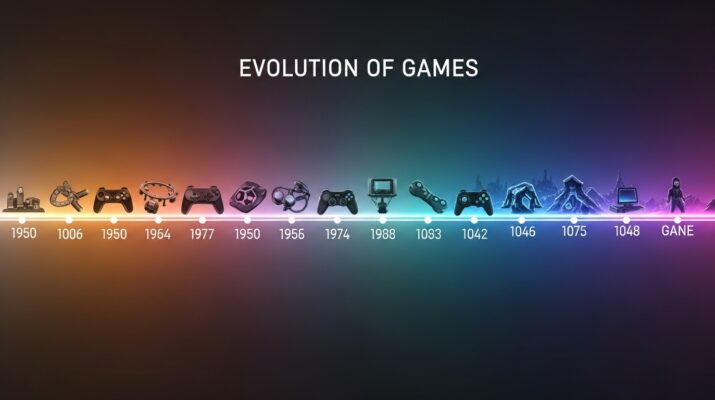
Games have been an essential part of human culture since the earliest days of civilization. Whether played with stones, sticks, cards, or high-end digital devices, games have always held the power to unite people, ignite creativity, and challenge the human mind. Over centuries, games have evolved from simple pastimes into a global phenomenon that defines entertainment, education, and even careers. From board games to eSports, from playgrounds to virtual reality, the universe of games has no boundaries. This blog explores the vast landscape of games, their evolution, significance, and the impact they have on our lives today.
The Origin of Games and Their Cultural Roots
The concept of games dates back thousands of years. Archaeological discoveries show that ancient civilizations such as Egypt, Mesopotamia, and China had their own traditional games that were played for both entertainment and spiritual reasons. The game of Senet, for example, is one of the oldest known board games from ancient Egypt. Similarly, Go, a strategic board game originating in China, has been played for over 2,500 years. These early games were often tied to rituals, teaching, and social gatherings.
In many cultures, games were seen as a reflection of life. They taught people patience, foresight, teamwork, and resilience. Traditional games were also a way of preserving cultural identity. Even today, many of these ancient games continue to influence modern gaming design, showing how deeply rooted they are in human history.
The Evolution of Games Through Ages
Games have continuously transformed alongside human progress. As societies became more complex, so did their games. The medieval era introduced chess to the world, a game that symbolizes war, strategy, and intellect. Later, during the 19th and 20th centuries, the industrial revolution brought mass production, allowing board games like Monopoly, Scrabble, and Ludo to reach households across the world.
The real revolution, however, came with technology. The mid-20th century marked the birth of video games. Early games like Pong and Space Invaders introduced an entirely new way of playing. As computers and consoles became more advanced, games evolved from simple 2D pixels into rich, immersive 3D worlds filled with storytelling and lifelike experiences.
Today, games exist in countless forms: console games, mobile games, PC games, VR experiences, and even augmented reality. The evolution of gaming technology continues to break boundaries, creating experiences that were once only dreams.
The Psychology Behind Playing Games
Games are more than entertainment. They tap deeply into human psychology. Every game, whether digital or traditional, triggers specific emotional and cognitive responses. The excitement of competition, the joy of achievement, and the frustration of failure all make gaming a unique emotional journey.
Psychologists have studied games for decades and found that they improve problem-solving skills, enhance memory, and promote strategic thinking. Multiplayer games foster social interaction and teamwork, while single-player games can provide relaxation and mental stimulation. Moreover, games fulfill one of our most basic human desires — the need for challenge and mastery.
When we play, our brains release dopamine, a neurotransmitter associated with pleasure and reward. This biological response explains why gaming can be addictive for some. However, in moderation, it can be a healthy form of escape, relaxation, and creativity.
The Rise of Video Games and Digital Entertainment
The world of gaming changed forever with the introduction of video games. From the early days of Atari and Nintendo to modern consoles like PlayStation and Xbox, video games have grown into one of the most dominant entertainment industries on the planet.
The diversity of genres is staggering — from action and adventure to puzzles, simulations, and role-playing games. Titles like The Legend of Zelda, Grand Theft Auto, and Call of Duty have become cultural icons, influencing movies, music, and even fashion.
Online gaming further expanded this universe by connecting players globally. Games like Fortnite, PUBG, and League of Legends have created massive online communities where millions of players compete, communicate, and collaborate. The digital age has turned gaming from a solitary activity into a shared social experience that transcends borders.
eSports: When Games Became a Profession
Once dismissed as a hobby, gaming has now evolved into a legitimate career path. The rise of eSports — competitive gaming on a professional level — has transformed the perception of gamers. Major tournaments attract millions of viewers and offer prize pools worth millions of dollars. Players are treated like athletes, complete with sponsorships, training, and fan followings.
Countries like South Korea, the United States, and China have embraced eSports as a mainstream sport. Games such as Dota 2, Counter-Strike, and Valorant have become arenas for intense competition. Streaming platforms have allowed fans to follow their favorite players and teams, making professional gaming one of the fastest-growing industries of the modern era.
eSports also highlights the discipline and teamwork required to excel. Contrary to stereotypes, professional gamers undergo rigorous training to perfect strategies and coordination, much like traditional athletes do.
Educational and Cognitive Benefits of Games
Beyond entertainment, games can be powerful educational tools. Educational games are now used in schools and institutions to make learning more interactive and fun. Subjects like mathematics, science, and history can be taught through well-designed games that challenge the mind and keep students engaged.
Strategy and puzzle games improve analytical thinking and memory. Role-playing games enhance creativity and empathy by allowing players to experience different perspectives. Even multiplayer online games can teach communication, leadership, and collaboration — all vital skills in today’s interconnected world.
Furthermore, simulation games like flight simulators or city builders have practical applications. They help professionals train in realistic scenarios without the risk of real-world consequences. In this way, gaming bridges the gap between theory and experience.
The Social Aspect of Gaming
Games have always been social at their core. Whether it is playing chess with a friend, gathering around a console, or teaming up online, gaming fosters human connection. Online platforms have turned gaming into a global community where people of all backgrounds can interact and cooperate.
In a world often divided by geography, culture, and language, games act as a universal language. They provide shared experiences that unite players. Many friendships, and even relationships, have been formed through gaming communities. Events, conventions, and online forums keep fans connected beyond the screen.
Gaming also serves as a safe social space for those who find face-to-face interaction difficult. For many, it becomes an outlet to express themselves freely, build confidence, and feel part of something larger.
The Artistic Side of Games
Games are not just entertainment; they are a form of art. Modern video games combine storytelling, music, design, and animation to create deeply emotional experiences. Developers spend years perfecting every detail, from visuals to narrative structure. The result is a medium that rivals films and literature in creativity and impact.
Games like Journey, The Last of Us, and Red Dead Redemption have shown that storytelling in games can evoke powerful emotions. The player’s ability to control the story makes gaming a unique art form where the audience becomes part of the narrative.
Soundtracks and visual design also play a huge role in creating immersive worlds. The combination of art, music, and interaction makes games one of the most complex and expressive forms of creative media.
Mobile Gaming: The Revolution in Our Pockets
The rise of smartphones has made gaming accessible to everyone. Mobile games have transformed the industry, reaching audiences who might never own a console or gaming PC. Simple yet addictive titles have captured billions of players worldwide.
Mobile gaming is convenient and diverse. From casual puzzle games to complex online battles, mobile platforms have something for everyone. The portability of smartphones means that gaming is no longer limited to specific locations or devices — it fits into our daily routines.
Moreover, mobile gaming has created opportunities for indie developers. With app stores and easy publishing tools, creative individuals can design and distribute their own games globally, fostering innovation and diversity in the industry.
The Role of Technology in Modern Gaming
Technology continues to reshape the gaming world. Graphics have become more realistic, artificial intelligence has made opponents smarter, and virtual reality has made gaming more immersive than ever.
Augmented reality blends the digital world with the physical, allowing players to experience games in their real environments. Cloud gaming has removed the need for expensive hardware, letting users play high-quality games on any device with an internet connection.
These advancements are pushing the boundaries of what is possible. The line between real life and virtual experience continues to blur, opening new creative possibilities for developers and players alike.
The Future of Games
The future of gaming is limitless. As artificial intelligence, virtual reality, and blockchain technologies evolve, the gaming experience will continue to transform. We may soon see games that adapt to our emotions, learn from our behavior, and create personalized experiences in real time.
The integration of the metaverse — shared virtual spaces that merge multiple games and social experiences — could redefine how we interact with digital worlds. Players will not just play games but live within them, shaping their own stories and communities.
Sustainability is another emerging focus. Developers are becoming more conscious of environmental impacts, creating games that promote awareness and minimize waste in production and consumption. The gaming industry is poised to influence not only entertainment but also education, culture, and technology in profound ways.
The Cultural Impact of Games
Games influence culture just as culture influences games. They reflect our values, fears, and dreams. Modern games often address complex themes such as morality, identity, and social justice. They serve as mirrors to society, exploring issues in ways that are both engaging and thought-provoking.
Gaming has also become a powerful storytelling medium. Characters like Mario, Lara Croft, and Master Chief have become cultural icons. The design, language, and aesthetics of gaming have influenced film, fashion, and even art galleries.
In many ways, games are a snapshot of human creativity. They show how we use technology not just to entertain ourselves but to express who we are and imagine who we can become.
Conclusion: Why Games Matter
Games are more than leisure; they are a reflection of human evolution, creativity, and imagination. They teach, connect, and inspire. From ancient board games to the immersive worlds of today’s virtual reality, games continue to shape how we think, learn, and interact.
The magic of gaming lies in its diversity — it can be competitive or relaxing, solitary or social, simple or complex. Every game tells a story, and every player becomes part of that story.
As technology advances and society evolves, the world of games will only grow more significant. Whether we play for fun, education, or competition, games will always remain one of the purest expressions of human spirit — a timeless bridge between imagination and reality.