
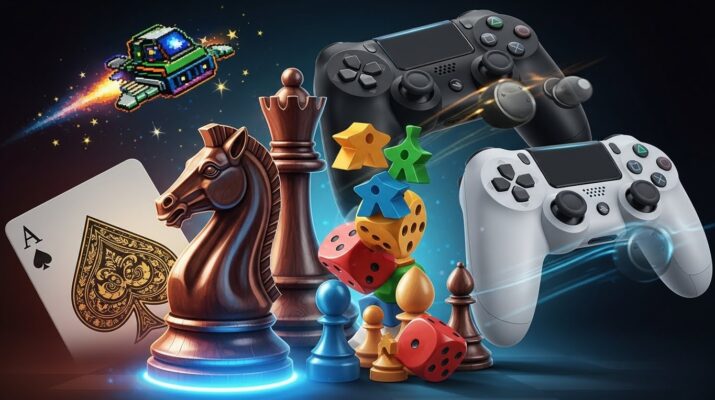
Introduction: The World of Games
Games have been an integral part of human culture for centuries. From ancient board games like chess and Go to modern video games and immersive digital experiences, games have always served as tools for entertainment, learning, and social connection. They engage the mind, test skills, and encourage creativity. In today’s world, games are more than a pastime; they are a medium that connects millions, fosters critical thinking, and influences culture globally. Whether simple or complex, competitive or casual, games reflect the human desire for challenge, achievement, and enjoyment.
The History of Games
The history of games traces back thousands of years. Early civilizations developed games for entertainment, education, and strategy training. The Egyptians played Senet, the Chinese developed Go, and the Romans enjoyed board games and athletic competitions. These early games were not only recreational but also served as a way to develop problem-solving skills and social interaction. With time, traditional games evolved into modern forms, influenced by culture, technology, and societal needs. The invention of video games in the 20th century marked a turning point, introducing interactive entertainment that combined storytelling, graphics, and user engagement.
Types of Games
Games today can be categorized into several types: board games, card games, video games, sports, puzzles, and role-playing games. Board and card games remain popular for social gatherings, offering strategy and chance in a tangible format. Video games have become the dominant form of entertainment for many, offering single-player adventures, multiplayer challenges, and massive online worlds. Sports combine physical skill with strategy, while puzzles test logical thinking and problem-solving. Role-playing games, whether tabletop or digital, immerse players in rich narratives, allowing them to explore alternate identities and worlds. Each type of game offers unique experiences and benefits, catering to different preferences and ages.
Games as a Social Connector
Contrary to the stereotype of the isolated gamer, many games foster social connection. Multiplayer video games, team sports, and cooperative board games encourage communication, collaboration, and friendly competition. Online gaming communities provide a platform for people from different backgrounds to meet, collaborate, and form lasting friendships. Social games have transformed gaming into a shared experience where people can connect across cities, countries, and continents. These social interactions also promote teamwork, leadership skills, and empathy, making games a valuable tool for both entertainment and personal development.
Cognitive Benefits of Gaming
Gaming is not only fun but also intellectually stimulating. Many games require strategic thinking, problem-solving, and quick decision-making. Puzzle games improve logical reasoning, while strategy games enhance planning and resource management skills. Action games sharpen reflexes and hand-eye coordination, and role-playing games encourage critical thinking and creativity. Studies have shown that gamers often exhibit better memory retention, multitasking abilities, and spatial awareness compared to non-gamers. By engaging the brain in diverse ways, games offer cognitive exercises disguised as entertainment, proving that play and learning can coexist effectively.
The Role of Storytelling in Games
Storytelling is central to many games, particularly role-playing and adventure titles. A compelling narrative enhances immersion, encourages exploration, and makes achievements meaningful. Players are not just participants but active contributors to the story, making choices that influence outcomes. The combination of visuals, music, dialogue, and interactive gameplay creates a unique storytelling experience that traditional media cannot replicate. Through these narratives, games can explore complex themes, evoke emotions, and provoke reflection, demonstrating that they are a legitimate form of artistic expression.
Games and Emotional Well-being
Games contribute to emotional health in multiple ways. They provide a sense of accomplishment, stress relief, and escapism from daily pressures. Achieving a difficult goal, solving a challenging puzzle, or winning a match releases dopamine, creating a feeling of satisfaction and motivation. Social games also combat loneliness by connecting players with friends and communities. Games with meaningful narratives can foster empathy by placing players in different perspectives. While moderation is essential, responsible gaming has clear benefits for mental well-being, making it a valuable component of leisure and personal growth.
Esports: The Professional Gaming Revolution
Esports has transformed gaming from a casual hobby to a professional career. Competitive gaming tournaments attract millions of viewers worldwide, with professional players dedicating significant time to training, strategy, and performance. Esports careers extend beyond players to include coaches, commentators, analysts, and content creators. The industry has gained mainstream recognition, with tournaments held in massive arenas and streamed globally. This professionalization has elevated gaming, proving that talent, strategy, and dedication in games can lead to tangible success, similar to traditional sports.
The Educational Potential of Games
Games are powerful tools for education and skill development. Educational games teach subjects like math, science, history, and languages in interactive and engaging ways. Simulations allow students to explore real-world scenarios safely, promoting critical thinking and decision-making. Gamification, the integration of game mechanics into non-game contexts, motivates learners through rewards, challenges, and progress tracking. Educational games encourage creativity, problem-solving, and collaboration, making learning enjoyable and effective. By bridging fun and knowledge, games have become essential tools in modern education and professional training.
Technology and the Future of Gaming
The gaming industry continues to innovate through technology. Virtual reality creates fully immersive worlds where players can interact physically with their environment. Augmented reality overlays digital elements onto the real world, transforming everyday spaces into game arenas. Artificial intelligence enables dynamic, adaptive gameplay that responds to player behavior, creating personalized experiences. Cloud gaming and streaming services make games more accessible, removing hardware limitations and allowing instant play. These advancements promise a future where gaming becomes increasingly immersive, interactive, and integrated into daily life.
Cultural Impact of Games
Games have a profound influence on culture. They shape trends, inspire art, music, and fashion, and reflect societal values. Many games explore social, political, and ethical themes, prompting discussions and raising awareness. Cultural representation in games promotes diversity and inclusivity, allowing players to experience different perspectives. Gaming also influences language, social behavior, and entertainment consumption patterns. As games become a mainstream cultural force, their impact extends far beyond play, shaping the way people think, interact, and express themselves.
Conclusion: Embracing the Power of Games
Games are more than mere entertainment; they are a reflection of human creativity, intelligence, and social connection. They challenge the mind, inspire emotion, and bring people together. From traditional board games to cutting-edge virtual realities, games offer diverse experiences that cater to all ages and interests. They contribute to cognitive growth, emotional well-being, social interaction, and even professional success through esports. As technology advances, the possibilities for gaming continue to expand, promising ever-more immersive and meaningful experiences. Embracing games means embracing play as a vital part of human culture, a tool for learning, and a gateway to exploration and connection. In a world increasingly driven by digital interaction, games remain one of the most compelling ways to engage, entertain, and enrich our lives.