
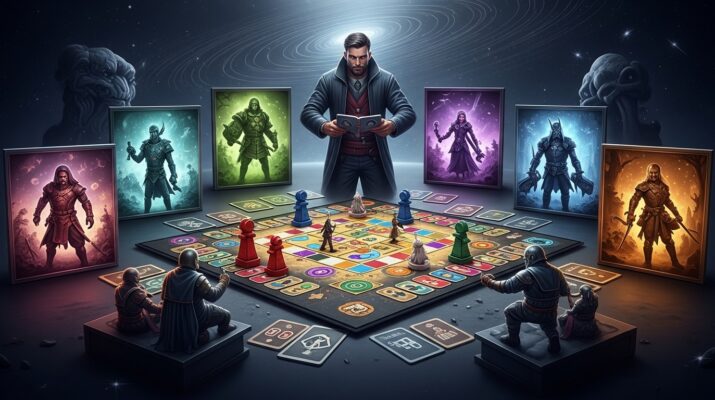
Games have always been more than just a source of entertainment. They represent creativity, strategy, challenge, and human connection. From ancient board games played in temples and courts to high-speed digital experiences that span the globe, games have evolved into a universal language. They capture imagination, test intellect, and build communities across all cultures. Whether played for competition, learning, or relaxation, games reflect the essence of human curiosity and the desire for fun.
The Origins of Games
The story of games is as old as civilization itself. Long before technology, ancient humans created simple forms of play. Archaeologists have discovered gaming artifacts from over 5,000 years ago, proving that games were part of daily life even in early societies. One of the oldest known board games, Senet, was played in ancient Egypt and symbolized the journey to the afterlife. Similarly, the Royal Game of Ur from Mesopotamia showcased the combination of luck and strategy, which remains a foundation in modern gaming.
In ancient China, games like Go and Mahjong were not only forms of entertainment but also tools for intellectual training and social bonding. In India, the game of Chaturanga was the early form of chess, which later spread through Persia and Europe, evolving into the game we know today. These early examples highlight that games were never just for leisure; they were deeply connected to philosophy, education, and culture.
The Rise of Traditional Games
As societies developed, so did their games. Every culture created its own versions of play, whether through dice, cards, or physical competition. Traditional games such as Mancala in Africa, Backgammon in the Middle East, and Ludo in South Asia each carried local history and customs. These games encouraged family bonding and friendly rivalry, passing values and traditions from one generation to another.
Sports, too, became a crucial part of this development. Ancient sports like the Greek Olympics or the Mayan ball game represented physical excellence and divine honor. The spirit of these games laid the groundwork for modern sportsmanship. Over time, competition became more organized, leading to the creation of professional tournaments and leagues. Traditional games gave rise to structured rules, standard equipment, and the idea of fair play, shaping the future of competitive gaming.
The Birth of Video Games
The twentieth century marked a new era in the history of games. With the invention of computers, play moved from physical boards to digital screens. The first video games were simple experiments in laboratories, such as Tennis for Two and Spacewar!. However, in the 1970s, arcade machines introduced gaming to the public. Titles like Pong and Pac-Man brought excitement and innovation, transforming the way people thought about entertainment.
The arrival of home consoles, such as the Atari 2600 and Nintendo Entertainment System, brought gaming into living rooms. For the first time, families could experience interactive storytelling and challenge one another without stepping outside. The colorful graphics, catchy soundtracks, and engaging gameplay of classics like Super Mario Bros. and The Legend of Zelda captured the imagination of millions. Video games became more than a pastime; they became a cultural phenomenon.
The Evolution of Game Design
As technology advanced, so did the complexity of games. Developers began exploring deeper narratives, emotional experiences, and realistic graphics. The 1990s and 2000s were a golden age of innovation. Three-dimensional environments, multiplayer features, and cinematic storytelling changed the perception of what games could achieve.
Titles like Final Fantasy, Metal Gear Solid, and The Sims demonstrated that games could evoke feelings of empathy, suspense, and creativity. Meanwhile, the rise of online gaming connected players around the world. Games like Counter-Strike, World of Warcraft, and Runescape built massive online communities that blurred the line between competition and friendship.
This evolution also expanded the definition of who could be a gamer. It was no longer limited to children or enthusiasts; adults, professionals, and even educators began recognizing the value of gaming as both a tool for relaxation and a platform for learning.
The Psychological Power of Games
One of the most fascinating aspects of games is their impact on the human mind. Psychologists have long studied how play influences behavior, motivation, and emotional well-being. Games provide a safe space to take risks, make decisions, and experience failure without real-world consequences. They encourage problem-solving, adaptability, and resilience.
Moreover, games trigger the brain’s reward system, releasing dopamine when players achieve goals or overcome challenges. This sense of accomplishment drives engagement and satisfaction. Educational games harness this principle to make learning enjoyable, while therapeutic games help patients recover cognitive functions or cope with mental stress.
Games also strengthen social connections. Cooperative games teach teamwork, while competitive ones build focus and discipline. In the digital age, gaming communities have become virtual families, offering support and companionship across distances.
The Art and Storytelling of Games
Modern games have become a form of art. Developers use visuals, music, dialogue, and design to express emotions and tell stories. Unlike movies or books, games allow players to shape the outcome through their choices, creating a unique and personal experience.
Narrative-driven games like The Last of Us, Life is Strange, and Red Dead Redemption 2 showcase how interactive storytelling can rival literature or cinema. Every character, environment, and sound contributes to immersion, turning players into participants rather than mere observers.
Artistic games also challenge conventions. Indie developers, often working with small budgets, experiment with new styles and concepts. Games such as Journey and Celeste emphasize emotion and creativity over realism, proving that art in games does not depend on technology alone but on imagination and vision.
The Role of Technology in Gaming
Technology continues to shape the gaming landscape in extraordinary ways. High-definition graphics, virtual reality, and artificial intelligence have redefined what is possible. Virtual reality headsets immerse players in lifelike worlds, while augmented reality brings gameplay into everyday environments.
Artificial intelligence enhances gaming by creating smarter opponents, adaptive worlds, and personalized experiences. Cloud gaming, where games are streamed over the internet, has made high-end titles accessible without expensive hardware. Players can now enjoy complex games on phones, tablets, or even smart TVs.
The integration of motion sensors, voice recognition, and wearable technology has expanded how we interact with games. The line between the physical and digital world grows thinner with each innovation. These advancements are not just technological feats; they are artistic milestones that keep pushing the boundaries of imagination.
Games and Education
Beyond entertainment, games have found a significant role in education. Educational games transform learning into an engaging and interactive experience. Subjects like history, mathematics, and science become more relatable when students can explore them through simulation or play.
For example, strategy games improve critical thinking and planning, while puzzle games enhance memory and logic. Simulation games allow learners to experiment with real-world concepts in a virtual environment, such as managing a city, running a business, or exploring the human body.
Teachers and institutions are increasingly using gamification — the integration of game elements into non-game contexts — to motivate students. Reward systems, progress bars, and challenges make education more dynamic, encouraging participation and curiosity.
The Social Impact of Games
Games have become a cultural force influencing art, music, fashion, and communication. Esports, or competitive gaming, has turned professional players into celebrities and attracted millions of viewers. Tournaments fill stadiums, and fans cheer for teams with the same passion as traditional sports.
Gaming has also become a platform for social expression. Players use games to discuss identity, inclusion, and creativity. Virtual worlds provide safe spaces where people can be whoever they want to be. Online games connect friends across continents, creating shared memories that transcend borders.
However, the social influence of games is not without challenges. Issues such as addiction, cyberbullying, and excessive screen time require awareness and responsibility. Developers and parents alike play crucial roles in promoting healthy gaming habits. When balanced properly, gaming can unite people, foster empathy, and inspire collaboration.
The Business and Industry of Gaming
The gaming industry today is one of the most powerful sectors of the global economy. It surpasses movies and music combined in annual revenue. From small indie developers to giant studios, the ecosystem of game creation involves creativity, marketing, and technology on an immense scale.
Console manufacturers, software developers, and streaming platforms continuously compete to innovate. Game development has become an art of balancing storytelling, graphics, and gameplay. Independent creators have also found success through digital marketplaces, allowing new ideas to thrive without massive corporate backing.
Microtransactions, downloadable content, and subscription models have transformed how players engage with games. While these systems can sometimes cause controversy, they also support continuous updates and expansions, keeping communities alive for years.
The Future of Gaming
The future of games promises even greater possibilities. With advancements in artificial intelligence, cloud computing, and virtual reality, gaming will become more personalized, accessible, and immersive. Players might experience fully interactive worlds where every decision shapes the narrative in real time.
Metaverse-style environments are already merging gaming with social and professional spaces, allowing users to work, create, and communicate inside digital worlds. The blending of reality and imagination will only deepen as technology grows.
Furthermore, environmental and ethical concerns are influencing the direction of game development. Studios are adopting sustainable practices, while storytelling increasingly addresses global issues such as climate change, equality, and human rights. The games of tomorrow will not just entertain but educate and inspire change.
Why Games Matter
Games are a reflection of human potential. They remind us that learning can be playful, that failure is a step toward mastery, and that imagination has no limits. Every generation discovers new ways to express creativity through play. Whether played on a wooden board or a virtual reality headset, games connect us through shared experiences.
They bridge gaps between cultures, age groups, and beliefs. They allow people to dream, to compete, to explore. Games are both ancient tradition and futuristic art form. Their importance lies not only in fun but in the way they shape minds and societies.
Conclusion
From the dusty boards of ancient civilizations to the dazzling digital worlds of today, games have traveled an incredible journey. They have grown from simple pastimes into vast ecosystems of creativity, technology, and emotion. Games teach, connect, and inspire. They are a mirror reflecting human intelligence, passion, and the endless drive to play.
In every era, games adapt to the needs and dreams of people. As we look toward the future, one truth remains clear — gaming will always be more than a hobby. It is a living art, an evolving culture, and a testament to the boundless imagination of humankind.