
Introduction
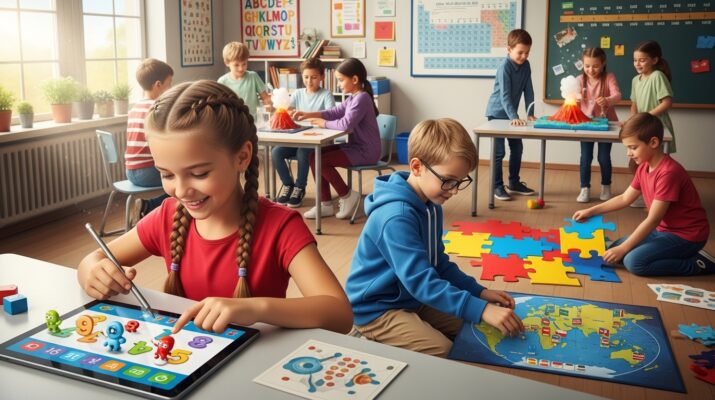
Education has never been confined to classrooms or textbooks. In recent years, learning has expanded into digital platforms, interactive tools, and most importantly, games. Educational games have redefined the way people of all ages absorb information, develop skills, and enjoy the process of learning. Unlike traditional teaching methods that can sometimes feel rigid, games offer immersion, engagement, and fun, while still providing valuable lessons. From children in elementary school to adults pursuing lifelong learning, educational games have proven their worth as effective tools for cognitive and skill development.
This blog explores the best educational games across various age groups, discussing their impact, unique features, and why they stand out. The goal is to highlight how games can be both entertaining and deeply enriching, proving that learning and fun can indeed coexist.
The Role of Games in Learning
Before diving into the best games, it is essential to understand why educational games work so well. Games tap into human curiosity and reward mechanisms. Players stay motivated through goals, levels, challenges, and rewards, which mirror the learning process itself. Whether solving puzzles, navigating stories, or completing challenges, players develop problem-solving abilities, critical thinking, and perseverance.
Educational games also address different learning styles. Visual learners benefit from graphics and animations, auditory learners from sound and narration, and kinesthetic learners from interactivity and gameplay mechanics. These elements make games inclusive and adaptive for learners of all kinds.
Educational Games for Young Children
1. Puzzle-Based Games
Puzzle games designed for young children help build foundational skills like logic, pattern recognition, and spatial awareness. Matching games, jigsaw puzzles, and interactive story-based puzzles engage children while teaching patience and problem-solving.
2. Math Adventures
Mathematics can be intimidating, but math-based adventure games turn abstract concepts into fun activities. Games where children solve math problems to move characters through levels or unlock treasures help them grasp addition, subtraction, multiplication, and division in a playful way.
3. Literacy Games
Games that focus on reading and language skills introduce young children to phonics, vocabulary, and sentence formation. These interactive tools strengthen early reading comprehension while keeping the process fun and interactive.
Educational Games for Teenagers
1. Strategy and Simulation Games
Teenagers benefit from games that encourage strategic thinking, planning, and decision-making. Simulation games that mimic real-world environments such as running a virtual business or managing resources can teach financial literacy, economics, and leadership skills.
2. Science and Exploration Games
Science-focused games allow teenagers to experiment with concepts in physics, chemistry, and biology. Virtual labs and interactive experiments let them learn safely in a digital environment, sparking curiosity about real-world applications.
3. Language Learning Games
Language games help teenagers pick up new languages through interactive dialogues, quizzes, and storytelling. By incorporating gaming mechanics into language learning, these tools make mastering new tongues both achievable and enjoyable.
Educational Games for College Students
1. Critical Thinking Games
At the college level, games that challenge logic and reasoning are essential. Complex puzzle games, mystery-solving adventures, and debate-based simulations sharpen the ability to analyze, interpret, and synthesize information.
2. History and Culture Games
Games with historical settings immerse players in past events, giving them firsthand experiences of different eras. Instead of memorizing dates, players engage with stories and events, developing a deeper appreciation for history and culture.
3. Skill-Based Games
Coding, design, and entrepreneurship games provide practical skills relevant to careers. Students can simulate real-world challenges in a low-risk, interactive environment, preparing them for professional life.
Educational Games for Adults
1. Brain Training Games
Adults benefit from games that focus on memory, problem-solving, and mental agility. Brain training games are designed to strengthen cognitive functions and keep the mind sharp, particularly important for aging populations.
2. Professional Skill Development Games
Adults can use gamified platforms to learn professional skills such as project management, communication, and negotiation. These simulations mimic workplace environments, making the learning process engaging and relevant.
3. Trivia and Knowledge Games
Trivia games spanning history, science, culture, and technology test general knowledge and provide continuous learning opportunities. Adults often enjoy competing with others, making these games both social and educational.
Educational Games for Families
One of the most powerful aspects of educational games is their ability to bring families together. Family-friendly board games and digital titles encourage collaboration, healthy competition, and bonding. Whether solving a puzzle together, engaging in trivia, or navigating a cooperative adventure, these games create lasting memories while educating players of all ages.
Benefits of Educational Games
- Improved Engagement: Games hold attention longer than traditional study methods.
- Practical Application: Players learn by doing, which improves retention.
- Confidence Building: Completing levels or challenges gives learners a sense of achievement.
- Collaboration and Communication: Multiplayer games teach teamwork and problem-solving.
- Stress-Free Learning: The entertainment aspect reduces the pressure often associated with learning.
How to Choose the Right Educational Game
Not every educational game is suitable for everyone. To choose the best one, consider the following:
- Age Appropriateness: Games should match the cognitive and developmental stage of the player.
- Learning Goals: Identify whether the focus is on math, language, science, critical thinking, or professional skills.
- Engagement Level: Look for games with immersive storylines, challenges, and rewards.
- Accessibility: Ensure the game is easy to use, available on multiple platforms, and affordable.
- Balance of Fun and Education: The most effective games are both enjoyable and informative.
The Future of Educational Games
The educational gaming industry continues to evolve with advancements in technology. Virtual reality and augmented reality are already revolutionizing how learners experience knowledge. Imagine walking through ancient civilizations, performing virtual surgeries, or exploring space—all within an interactive game. Artificial intelligence is also making games adaptive, personalizing learning paths based on individual strengths and weaknesses.
In the future, educational games are likely to merge seamlessly with formal education. Classrooms may become hybrid environments where textbooks coexist with immersive game-based platforms, making learning more holistic and impactful.
Conclusion
Educational games are no longer just a niche category; they have become essential tools for learners of all ages. From building fundamental skills in children to enhancing professional abilities in adults, these games prove that learning can be fun, interactive, and rewarding. The best educational games balance entertainment with meaningful content, ensuring that players are not only entertained but also enriched.
As technology continues to advance, the potential of educational games will expand, offering even more engaging and personalized experiences. Whether you are a child exploring numbers, a teenager learning a new language, a college student building critical thinking skills, or an adult sharpening your memory, there is an educational game designed just for you.