
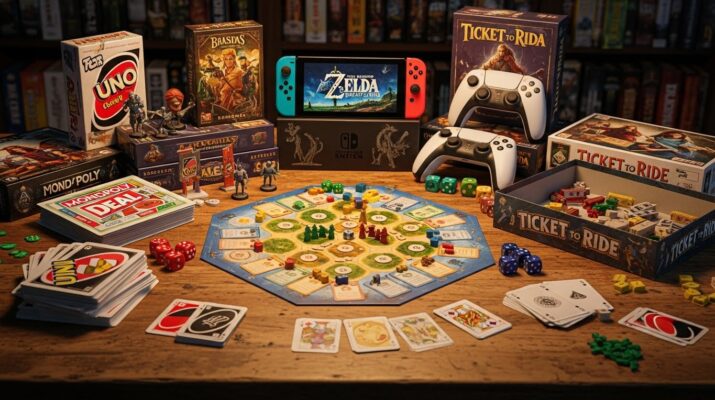
Games have been a part of human culture for centuries, serving not only as a form of entertainment but also as a way to socialize, strategize, and engage with challenges. Whether it’s the simplicity of a chessboard, the magic of childhood games, or the complex virtual worlds of today’s video games, the concept of gaming has always been a reflection of creativity, skill, and storytelling. As technology has evolved, so too have the types of games that captivate us. In this blog post, we’ll explore the multifaceted world of gaming—from its roots in traditional games to the future of virtual reality and esports.
The Evolution of Gaming: From Ancient Pastimes to Modern Entertainment
Games, in one form or another, have existed since ancient times. In fact, the earliest evidence of games dates back thousands of years. One of the oldest known board games, Senet, was played by the ancient Egyptians around 3100 BCE. It wasn’t just a game for amusement but also had spiritual significance. Fast forward to the 20th century, and gaming began to evolve with the advent of mechanical devices such as the pinball machine, which would later pave the way for the arcade games of the 1970s and 1980s.
In the late 1950s and early 1960s, computers began to take center stage, and game developers began experimenting with digital formats. The famous game Tennis for Two (1958) and Spacewar! (1962) are considered some of the earliest examples of video games. However, it wasn’t until Pong, created by Atari in 1972, that video games became widely accessible to the public. This marked the beginning of an era where games would transcend physical boundaries and be enjoyed globally.
As technology advanced, so did the complexity and variety of games. From the pixelated graphics of early 8-bit systems like the Atari 2600 to the high-definition worlds of today’s consoles and PC games, the evolution of gaming has been nothing short of remarkable. The rise of the internet in the late 1990s and early 2000s further changed the landscape, enabling online multiplayer games and the creation of entire virtual worlds.
The Golden Age of Console and PC Games
The 1980s and 1990s are often considered the golden age of console gaming, with systems like the Nintendo Entertainment System (NES), Super Nintendo (SNES), Sega Genesis, and Sony PlayStation bringing groundbreaking games to the masses. Games like Super Mario Bros., The Legend of Zelda, and Sonic the Hedgehog became icons, helping to shape the gaming industry and attract players of all ages.
These games didn’t just revolutionize gaming in terms of technology; they also introduced new narrative elements and gameplay mechanics that are still popular today. For example, Super Mario Bros. was one of the first games to feature side-scrolling, allowing for more complex and dynamic level designs. Similarly, The Legend of Zelda introduced an open-world adventure where players could explore, solve puzzles, and uncover secrets, laying the foundation for many open-world games we play today.
Meanwhile, PC gaming also saw a massive surge in popularity, with games like Doom, Warcraft, and Command & Conquer setting new standards in graphics, multiplayer, and strategy. These games helped to establish the foundation for genres like first-person shooters (FPS), real-time strategy (RTS), and role-playing games (RPGs), which remain staples of modern gaming.
The late 90s and early 2000s also marked the rise of online multiplayer games, thanks to faster internet connections and dedicated gaming servers. Games like EverQuest and Diablo II offered immersive worlds where players could connect with others in real-time, creating a sense of community that was previously absent from traditional gaming.
The Rise of Mobile Gaming: Play Anywhere, Anytime
One of the most significant shifts in the gaming landscape in recent years has been the rise of mobile gaming. With the introduction of smartphones in the late 2000s, gaming became more accessible than ever before. Thanks to app stores and mobile marketplaces, millions of players now had the ability to play games on-the-go, from simple puzzle games like Angry Birds to complex strategy games like Clash of Clans.
The portability of mobile devices revolutionized gaming, allowing players to access a wide variety of titles with just a few taps. Mobile gaming broke down the traditional barriers of gaming, attracting a more diverse audience, including people who had never considered gaming before. Moreover, the freemium model—offering free-to-play games with optional in-app purchases—opened up new ways for developers to monetize their creations and ensure that gaming could be enjoyed by a wide audience, regardless of budget.
Mobile games like Pokémon Go have also shown that gaming doesn’t have to be confined to a screen. By integrating augmented reality (AR), mobile games allow players to interact with the world around them in innovative ways. This marks the beginning of an era where the lines between reality and virtual worlds are increasingly blurred.
Online Multiplayer and Esports: Gaming Becomes a Spectacle
Over the last decade, the rise of online multiplayer games has become one of the most influential trends in the gaming industry. Games like Fortnite, League of Legends, and Call of Duty: Warzone have transformed gaming from a solitary or social experience into a global phenomenon. These games allow players to compete against others from around the world in real-time, leading to a new form of social interaction and community building.
But what truly sets multiplayer games apart is the explosion of esports. Once considered a niche hobby, esports now attracts millions of viewers globally. Tournaments for games like Dota 2, League of Legends, and Counter-Strike: Global Offensive offer prize pools that can reach into the millions, turning professional gamers into celebrities and providing a new avenue for gaming content creation.
Streaming platforms like Twitch and YouTube Gaming have further fueled this phenomenon by allowing gamers to broadcast their gameplay to an audience. Today, esports is recognized as a legitimate form of entertainment, with professional teams, sponsors, and even college scholarships being awarded to top players.
Virtual Reality and Augmented Reality: Gaming in Immersive Worlds
As technology advances, so too does the potential for new types of gaming experiences. Virtual reality (VR) and augmented reality (AR) are pushing the boundaries of gaming, offering players immersive, first-person experiences like never before.
Virtual reality places players directly into a 3D virtual world, using headsets like the Oculus Rift or PlayStation VR to create a fully immersive experience. VR games range from action-packed adventures like Beat Saber to eerie survival horror experiences like Resident Evil 7, offering players the ability to interact with their surroundings and make choices in real-time.
Meanwhile, augmented reality overlays digital content onto the real world, blending the virtual with the physical. Games like Pokémon Go have demonstrated the potential for AR by allowing players to explore their neighborhoods and catch Pokémon in real life. As AR technology continues to evolve, we’re likely to see even more innovative games that merge digital and physical spaces.
The Future of Gaming: AI, Cloud Gaming, and Beyond
Looking ahead, the future of gaming is incredibly exciting. Technologies like artificial intelligence (AI) and cloud gaming are poised to revolutionize the gaming experience once again. AI is already being used in games to create more realistic non-playable characters (NPCs) that can adapt to player behavior, creating a more dynamic and unpredictable experience.
Cloud gaming, on the other hand, could eliminate the need for expensive consoles or powerful gaming PCs. With services like Google Stadia and Xbox Cloud Gaming (formerly known as Project xCloud), players can stream games directly to their devices without needing to download or install anything. This opens up gaming to a larger audience and removes the barriers that once limited who could play and where.
Moreover, the rise of indie games continues to shape the landscape of gaming. Thanks to platforms like Steam and itch.io, independent developers can create and distribute games without the backing of major studios. These indie games often push creative boundaries and provide fresh, innovative gameplay experiences that wouldn’t be possible in a larger corporate environment.
Conclusion: Gaming as a Cultural Force
From humble beginnings as ancient pastimes to complex virtual worlds, gaming has evolved into one of the most significant cultural forces of the 21st century. Today, gaming is not only a multi-billion-dollar industry but also a global social activity that connects people from all corners of the earth. As technology continues to advance, the future of gaming looks even more promising, with innovations like VR, AI, and cloud gaming paving the way for new, immersive experiences.
Games have transcended entertainment—they have become a part of our daily lives, our communities, and our culture. Whether you’re a casual mobile gamer, a competitive esports enthusiast, or a lover of virtual worlds, there’s no denying that gaming has become an essential part of the modern entertainment landscape. The only question now is: where will the next level of gaming take us?