
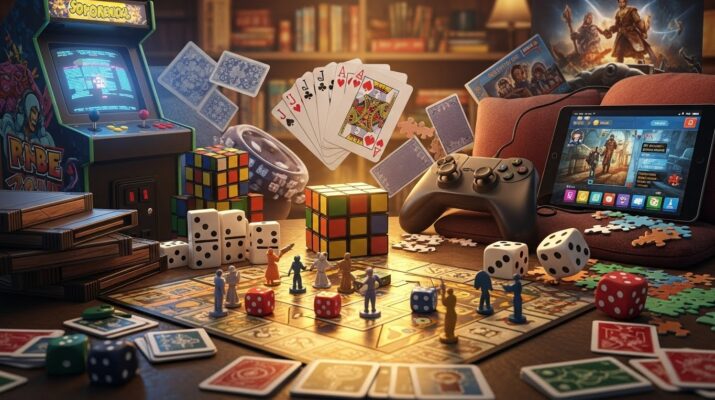
Introduction: The Everlasting Appeal of Games
Games have been part of human civilization for thousands of years, evolving from simple pastimes to complex digital worlds that captivate millions. They entertain, challenge, and connect people across all ages and cultures. What makes games unique is their ability to blend fun with learning, competition with cooperation, and imagination with strategy. From childhood board games to massive multiplayer online adventures, games have become more than just hobbies—they are a reflection of human creativity and a tool for social interaction. In today’s digital era, games influence culture, shape technology, and even impact education, making them a significant force in modern society.
A Journey Through the History of Games
The concept of games is ancient. Civilizations like the Egyptians, Greeks, and Chinese played board games and engaged in physical competitions for entertainment, education, and social bonding. Games like Senet, Go, and early dice games served as more than leisure activities; they developed strategic thinking and decision-making skills. The invention of cards, chess, and other board games expanded this tradition into a structured form of play. In the 20th century, the rise of video games marked a turning point, introducing interactive, immersive experiences that combined storytelling, visuals, and user engagement. Games have continually evolved, reflecting the technological and cultural shifts of each era.
Different Types of Games
Games today are incredibly diverse. Board and card games continue to thrive as social activities that combine strategy and chance. Sports games, both physical and digital, provide competition and entertainment while promoting teamwork and skill development. Video games dominate the contemporary entertainment landscape, offering single-player adventures, multiplayer experiences, and massive online communities. Puzzle and logic games challenge critical thinking, while role-playing games immerse players in expansive narratives and character development. Each type of game provides unique benefits, from intellectual stimulation to social bonding and emotional satisfaction.
The Social Impact of Gaming
Modern gaming is far from a solitary activity. Multiplayer games, online competitions, and cooperative board games connect people worldwide, fostering collaboration and communication. Gaming communities form around shared interests, offering players a sense of belonging and friendship. These social connections extend beyond the screen; friends meet in person at tournaments, events, and conventions, creating real-world bonds. Social interaction in gaming also develops teamwork, leadership, and conflict-resolution skills, proving that games can be a positive force for personal growth and community building.
Cognitive Benefits of Playing Games
Games offer more than fun—they stimulate the brain. Puzzle and strategy games improve problem-solving abilities, planning, and resource management. Action and adventure games enhance reflexes, hand-eye coordination, and spatial awareness. Role-playing games encourage creativity, critical thinking, and decision-making under pressure. Even casual games can improve memory and focus. Research suggests that regular gaming can boost cognitive functions, making games an engaging way to challenge the mind. In many ways, games act as mental workouts disguised as entertainment, combining challenge with enjoyment.
The Role of Storytelling in Games
Storytelling is at the heart of many games. Whether through rich narratives in role-playing games or immersive plots in adventure titles, storytelling adds depth and emotional engagement. Players often make choices that influence the outcome, giving them a sense of agency and involvement. The combination of music, graphics, dialogue, and interactivity creates experiences unlike any other medium. Story-driven games can explore complex themes, evoke empathy, and even address social issues, showing that games are not just entertainment—they are an art form capable of inspiring and educating.
Games and Emotional Well-Being
Games contribute significantly to emotional health. Achieving goals, completing challenges, and overcoming obstacles release dopamine, providing a sense of satisfaction and motivation. Games offer a safe escape from stress and daily pressures, allowing players to relax and recharge. Social games combat loneliness by fostering interaction, while story-driven games evoke empathy and understanding by placing players in different perspectives. Moderation is important, but gaming can be a therapeutic outlet that promotes emotional resilience and mental well-being.
The Rise of Competitive Gaming and Esports
Esports has turned gaming into a professional pursuit. Competitive tournaments now attract millions of viewers and offer substantial prize money, creating opportunities for skilled players to build careers. Professional gaming requires dedication, practice, and strategic thinking, similar to traditional sports. Esports extends beyond players to coaches, analysts, commentators, and event organizers. The rise of esports has legitimized gaming as a serious profession, demonstrating that talent and strategy in gaming can lead to global recognition and financial success.
Games as Tools for Learning and Education
Games are powerful educational tools. They teach problem-solving, critical thinking, and strategic planning while keeping players engaged. Educational games help students learn mathematics, science, language, and history in interactive ways. Simulations and role-playing games allow learners to explore real-world scenarios safely, practicing decision-making and teamwork. Gamification—the use of game principles in learning and professional training—motivates participants through challenges, rewards, and progress tracking. By blending fun with knowledge, games make education interactive and impactful.
Technology and the Future of Gaming
Technology continues to transform gaming. Virtual reality creates fully immersive experiences, allowing players to feel present in digital worlds. Augmented reality integrates games into real-life environments, turning everyday spaces into interactive playgrounds. Artificial intelligence personalizes gameplay, creating adaptive and responsive experiences. Cloud gaming and streaming platforms remove hardware limitations, making games accessible to a wider audience. These technological advancements promise a future where gaming is more immersive, engaging, and integrated into daily life than ever before.
Cultural Influence of Games
Games influence culture in profound ways. They shape fashion, music, language, and social trends, while reflecting societal values and themes. Cultural diversity in games encourages empathy and understanding, exposing players to different perspectives and traditions. Games also spark creativity, inspiring art, fan communities, and content creation. As a global phenomenon, gaming fosters shared experiences and cultural exchange, demonstrating its role as a powerful cultural force.
Conclusion: Embracing the Power of Games
Games are more than a form of entertainment—they are a tool for learning, social connection, personal growth, and cultural influence. They stimulate the mind, foster emotional well-being, and encourage creativity. From ancient board games to modern virtual realities, games reflect human innovation, imagination, and the desire for challenge and connection. Whether played casually or professionally, games have the power to entertain, educate, and unite people around the world. In an increasingly digital era, games remain one of the most engaging and transformative forms of recreation, proving that play is not just a pastime but a vital part of life.