
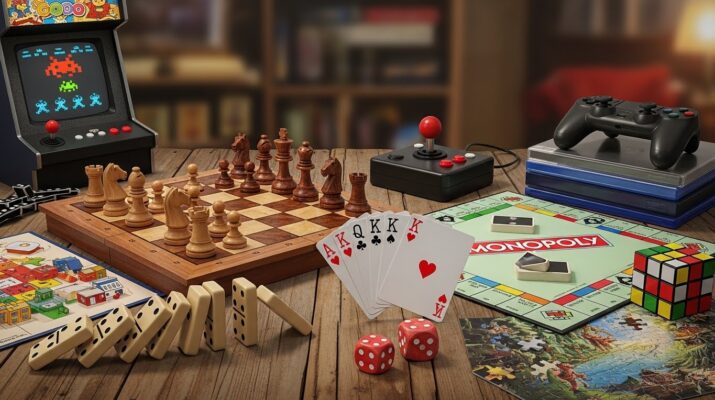
In the modern world, games have evolved far beyond simple pastimes. From ancient board games to immersive digital worlds, games have become a central part of human culture and social interaction. They entertain, educate, and challenge our minds in ways few other mediums can. This blog explores the multifaceted universe of games, highlighting unique experiences and their impact on our lives.
The Evolution of Games
Games have been part of human civilization for thousands of years. Archaeological discoveries have revealed ancient versions of chess, dice, and board games, showing that humans have always sought ways to challenge themselves and each other. Initially, games were simple, designed to test luck or strategy, but over centuries, they evolved in complexity and purpose.
In the early 20th century, board games became a household staple, offering families ways to bond and compete. Titles like Monopoly and Scrabble were more than just games; they reflected societal trends and encouraged critical thinking. These games emphasized strategy, planning, and communication, laying the foundation for modern gaming experiences.
The arrival of video games in the 1970s revolutionized the concept of play. With interactive screens, players could now explore virtual worlds and take on roles previously unimaginable. Video games introduced narrative storytelling, complex mechanics, and even multiplayer experiences, pushing the boundaries of creativity and engagement.
Digital Games: A Universe of Possibilities
Digital games encompass a wide range of experiences, from casual mobile apps to vast, immersive online worlds. These games can transport players to entirely new realms, offering experiences that are both entertaining and intellectually stimulating.
Story-Driven Adventures
Narrative-based games have become increasingly popular, blending storytelling with interactive mechanics. Games like role-playing adventures allow players to shape the outcome of the story based on their decisions. This combination of choice and consequence creates a deeply personal experience, making players feel like active participants in a living world.
Puzzle and Strategy Games
Puzzle and strategy games challenge the mind in unique ways. These games require logical thinking, planning, and problem-solving skills. Titles in this genre often present complex scenarios that demand creativity and foresight, turning gameplay into a form of mental exercise. Players are rewarded not just for speed, but for cleverness and insight, making these games deeply satisfying.
Multiplayer Online Worlds
The rise of online multiplayer games has transformed gaming into a social phenomenon. In these virtual spaces, players collaborate or compete with others from around the globe. Online games foster teamwork, communication, and community-building, providing social experiences that transcend physical boundaries. For many, these games become virtual meeting places, where friendships are formed and maintained over long periods.
The Psychology of Gaming
Games are more than just entertainment; they have profound effects on the human mind. Psychologists have studied gaming behavior extensively, uncovering how games influence cognition, emotion, and behavior.
Playing games can improve hand-eye coordination, reaction time, and problem-solving abilities. Strategy games, in particular, encourage players to plan ahead, anticipate consequences, and make quick decisions. These skills often translate to real-world situations, demonstrating the cognitive benefits of gaming.
Games also offer emotional rewards. Completing a challenging level or achieving a high score can provide a sense of accomplishment and boost self-esteem. Multiplayer games foster social interaction, reducing feelings of loneliness and creating a sense of belonging. The immersive nature of gaming allows players to experience empathy and explore complex moral and ethical scenarios safely.
Unique Game Mechanics That Redefine Play
Some games stand out not just for their stories or graphics, but for the way they reinvent the concept of play itself. These games experiment with mechanics that challenge traditional norms, offering players truly unique experiences.
Games Without Traditional Objectives
Certain games break the mold by removing conventional goals. Instead of winning or losing, these games encourage exploration and creativity. Players may interact with the environment in unexpected ways, discovering hidden elements and creating their own narratives. Such games focus on the journey rather than the destination, promoting curiosity and imagination.
Procedurally Generated Worlds
Procedurally generated games create content algorithmically rather than relying on handcrafted designs. Each playthrough offers a unique experience, with new landscapes, challenges, and surprises. This approach ensures that no two players’ experiences are the same, enhancing replayability and discovery. Players must adapt to evolving conditions, testing their creativity and problem-solving skills.
Hybrid Genre Games
Hybrid games combine elements from multiple genres, creating innovative gameplay. For example, a game might blend role-playing with strategy, or adventure with puzzle-solving. This fusion allows for more dynamic and unpredictable experiences, keeping players engaged and continuously challenged. Hybrid games often appeal to a broad audience, as they offer multiple ways to interact and succeed.
Games as Cultural Artifacts
Games are more than just entertainment; they reflect cultural values, societal trends, and technological progress. Studying games can offer insight into the time and place in which they were created.
For instance, early board games often mirrored social hierarchies and economic principles, subtly teaching players about societal norms. Modern video games explore contemporary issues such as environmentalism, politics, and ethics, inviting players to consider complex topics through interactive experiences.
Games also serve as a medium for artistic expression. Visual design, soundscapes, and storytelling techniques combine to create immersive worlds that rival traditional art forms. Indie game developers, in particular, push the boundaries of creativity, crafting experiences that challenge conventional aesthetics and narrative structures.
The Rise of Esports
Competitive gaming, or esports, has emerged as a global phenomenon. Professional players compete in tournaments for substantial prizes, drawing large audiences both online and in physical arenas. Esports has transformed gaming into a spectator sport, blending skill, strategy, and entertainment.
Esports also highlights the discipline and dedication required to excel. Players spend hours honing their skills, analyzing opponents, and strategizing. The community surrounding esports fosters mentorship, teamwork, and a shared passion for gaming, creating a unique subculture that continues to grow worldwide.
Educational and Therapeutic Applications of Games
Beyond entertainment, games have practical applications in education and therapy. Educational games use engaging mechanics to teach subjects such as mathematics, language, and history. By making learning interactive, these games can improve retention and motivation.
Therapeutic games are used to aid mental health, rehabilitation, and cognitive development. Games designed for therapy help patients develop motor skills, cope with stress, and improve focus. Virtual reality games, in particular, offer immersive experiences that can treat phobias, PTSD, and anxiety by simulating controlled environments for exposure therapy.
The Future of Gaming
The future of gaming promises even greater innovation and immersion. Emerging technologies like virtual reality, augmented reality, and artificial intelligence are pushing the boundaries of what games can offer. Players may soon inhabit fully interactive worlds, where the environment reacts dynamically to their choices and actions.
Cloud gaming is making high-quality experiences more accessible, allowing players to stream complex games without the need for expensive hardware. Artificial intelligence is enhancing non-player characters, creating more realistic and responsive game worlds. The integration of AI and procedural generation will likely result in infinite, evolving experiences tailored to individual players.
Social and collaborative aspects of gaming will continue to expand, blurring the line between play and real-life interaction. Games may become platforms for creativity, education, and social engagement, shaping how we work, learn, and connect.
Conclusion
Games are no longer just simple diversions; they are complex, multifaceted experiences that challenge, entertain, and inspire. From ancient board games to modern digital adventures, games reflect human creativity, culture, and social interaction. They stimulate our minds, provide emotional rewards, and offer endless opportunities for exploration and discovery.
As technology continues to advance, the boundaries of what games can achieve will expand, creating new worlds and experiences that were once unimaginable. Games are not just a reflection of our current society—they are a lens into our potential, a playground for the imagination, and a testament to the enduring human desire to play.
Whether you enjoy strategy, storytelling, competition, or exploration, games have something unique to offer everyone. They are an art form, a cultural artifact, a mental exercise, and a source of joy. In embracing the world of games, we embrace creativity, challenge, and the limitless possibilities of human imagination.