
Introduction
Games have been an integral part of human civilization for centuries. From simple board games in ancient societies to complex digital worlds today, games have evolved alongside humanity, reflecting culture, technology, and imagination. They are more than just a way to pass the time—they are tools for learning, social interaction, personal growth, and entertainment. This blog explores the multifaceted impact of games on individuals, society, and culture, examining their evolution, benefits, and significance in modern life.
The Evolution of Games
Games have existed for millennia, with evidence of dice, chess, and other recreational activities dating back thousands of years. Ancient civilizations such as Egypt, Mesopotamia, and China created games not only for entertainment but also for teaching strategy, numeracy, and social skills. Games like Senet in Egypt and Go in China combined skill, logic, and competition, laying the foundation for modern gameplay.
The 20th century brought board games, card games, and tabletop role-playing games, creating shared experiences that strengthened social bonds. With the advent of digital technology, video games emerged, transforming the concept of games entirely. Today, games span physical, board-based, and digital formats, each offering unique experiences while retaining the core principles of fun, challenge, and engagement.
The Psychological Benefits of Gaming
Games provide substantial psychological benefits. They improve problem-solving skills, memory, focus, and cognitive flexibility. Puzzle games, strategy games, and role-playing games require critical thinking and decision-making, enhancing mental agility. Regular engagement in gaming has been linked to improved attention span, spatial awareness, and creative thinking.
Games also offer a safe environment for experimentation and learning from failure. Losing a game encourages reflection, resilience, and adaptability, skills that translate into real-life problem-solving. Furthermore, games can reduce stress and provide an outlet for relaxation, promoting emotional well-being in an increasingly complex world.
Games and Social Interaction
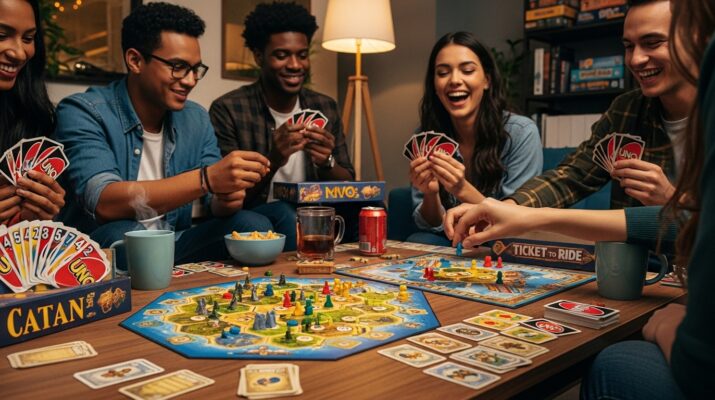
Games have always been a medium for social connection. Board games, card games, and team sports historically brought people together, fostering cooperation, communication, and healthy competition. In digital gaming, multiplayer platforms and online communities allow players from around the world to collaborate, compete, and form lasting friendships.
Cooperative games enhance teamwork and communication skills. Players must strategize, assign roles, and coordinate actions to achieve common goals. Even competitive games teach sportsmanship, empathy, and conflict resolution, reinforcing the social aspects of human interaction. In many ways, games act as bridges between individuals, transcending cultural, linguistic, and geographical boundaries.
Educational Value of Games
Games are increasingly recognized as valuable educational tools. They provide experiential learning experiences, allowing players to engage actively with concepts rather than passively absorbing information. Educational games cover a wide range of subjects, from mathematics and science to history and language skills, creating immersive learning environments.
Gamification, the integration of game elements into education, motivates students by providing challenges, rewards, and progression systems. By turning learning into an engaging and interactive experience, games encourage curiosity, problem-solving, and self-directed exploration. Schools and educators are leveraging games to enhance classroom engagement, promote critical thinking, and make learning enjoyable.
Games and Creativity
Games are a powerful medium for creativity. Sandbox and simulation games allow players to design, build, and experiment in virtual environments. Titles like Minecraft, The Sims, and creative strategy games encourage innovation, imaginative storytelling, and design thinking. Players develop skills in planning, spatial reasoning, and creative expression.
Even competitive games foster creativity by requiring players to adapt strategies dynamically, think critically, and solve complex problems under pressure. The interactive nature of games allows players to explore possibilities and experiment with outcomes, making gaming a fertile ground for creative development.
Cultural Impact of Games
Games reflect and influence culture. Traditional games often carry historical significance, teaching values, myths, and societal norms. Digital games, with their narratives, character designs, and world-building, convey cultural ideas and global perspectives. Storytelling in games allows players to explore diverse cultures, moral dilemmas, and social issues, promoting empathy and understanding.
Gaming culture has also created its own art, music, and community-driven content. Esports, streaming platforms, fan art, and modding communities have transformed games into cultural phenomena, connecting players worldwide and influencing entertainment trends, media, and even fashion.
The Role of Games in Technology Advancement
The gaming industry has been a driver of technological innovation. Graphics, artificial intelligence, virtual reality, and interactive storytelling have been pushed to new heights by the demands of gaming. Game engines and simulation technology often find applications beyond entertainment, in fields such as education, medicine, architecture, and engineering.
Virtual reality (VR) and augmented reality (AR) games are redefining immersive experiences, enabling players to interact with virtual worlds in unprecedented ways. The advancement of cloud gaming, AI-driven game design, and motion-sensing technologies continue to expand the possibilities of how games are developed and experienced.
Games as a Career and Industry
The gaming industry has evolved into a global economic powerhouse. Video game development, esports, streaming, and content creation provide a wide range of career opportunities. Professional esports players, game designers, writers, animators, programmers, and community managers contribute to a multi-billion-dollar global industry.
Esports tournaments draw millions of viewers worldwide, offering prize pools comparable to traditional sports. Game streaming and content creation allow individuals to build careers and influence culture through platforms like Twitch and YouTube. The professionalization of gaming has legitimized it as a career path, providing opportunities for passion-driven work.
The Future of Games
The future of games is expansive and dynamic. As technology advances, games will continue to integrate more immersive experiences, adaptive AI, and cross-platform interactions. Education, therapy, and training programs will increasingly leverage games for experiential learning and skill development.
Games will also continue to serve as social platforms, connecting people globally and fostering inclusive communities. The convergence of gaming with emerging technologies like VR, AR, AI, and cloud computing will redefine what it means to play, learn, and interact in digital environments. Games are not only entertainment—they are evolving into a medium that shapes culture, society, and human potential.
Conclusion
Games are far more than mere entertainment. They are tools for learning, social connection, creative expression, cultural reflection, and technological innovation. From ancient board games to modern digital worlds, games have consistently played a crucial role in human development and society.
Engaging with games develops cognitive, emotional, and social skills, while fostering creativity and resilience. They bring people together, inspire innovation, and create career opportunities. As technology advances, games will continue to evolve, impacting education, culture, and entertainment in profound ways.
Ultimately, games are a celebration of human imagination, skill, and collaboration. They remind us that play is not just leisure—it is a fundamental part of how we learn, connect, and grow. Through games, we explore possibilities, challenge ourselves, and build communities, shaping not just individual lives but the broader fabric of society.